
Secret Intelligence

This course provides an advanced introduction to intelligence studies. The theoretical basis for studying secret intelligence is supplemented with insights into concrete practices, in both Swedish and international contexts, in “normal” times as well as in crisis situations.
Empirically, the course covers traditional espionage as well as new forms of information gathering and electronic surveillance. In relation to these empirical phenomena, a number of issues are discussed, concerning for example the relationship between intelligence officers and politicians; ethics and leadership; the difficulty of making accurate assessments of risks and threats; and the opportunities and challenges of international collaborations on matters of secret intelligence.
- Application opens:
- 2026-09-15
- Last day for application:
- 2026-10-15
- Education start:
- Spring semester 2027
- Scope:
- 7.5 credits
- Study mode:
- Campus
- Study period:
- 2027-02-22 - 2027-03-25
- Study pace:
- 100%
- Education cycle:
- Second cycle
- Language of instruction:
- English
- Course syllabus
What does the course lead to?
During this course, you will get a good grasp of what intelligence studies are, both as a distinct research field and as part of other research traditions. Being a course in political science, the course addresses in particular the political dimensions of secret intelligence. After the course, you will be able to independently analyse contemporary challenges related to covert intelligence work, including the difficulties of intelligence co-operation, threat and risk assessments, and ethics and leadership.
Structure of the course
The course is held in English and consists of seven lectures, one seminar, one workshop and an oral exam.
During the lectures, different themes will be introduced and key issues within the course literature are highlighted before the seminar/workshop. The seminar and the workshop require active participation.
Contact
If you have questions about the course, please contact the Study Counsellors.
You can reach us by e-mail: studievagledning@fhs.se
Other programmes and courses
Discover the Swedish Defence University
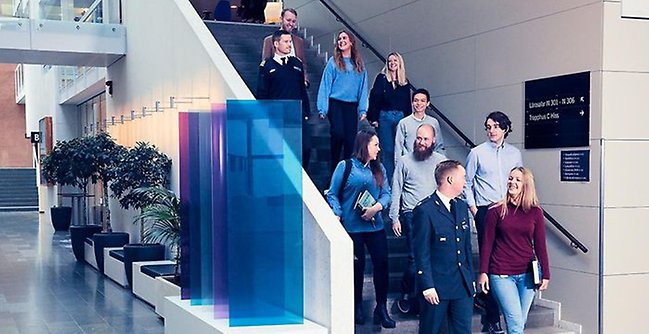
Education at the Swedish Defence University
Studies at Swedish Defence University - a both civil and military university - offers a completely different experience compared to most other universities.