
Security and crisis in an everyday perspective

What does traditional, state-centric perspectives on security and crisis miss?
Research on ‘the everyday’ focuses on personal and ordinary experiences in relation to security and crisis, often drawing on feminist insights. It turns to overlooked agents and alternative sites that may be messy and mundane, taken for granted, or invisible in mainstream literature. It includes studies on the micropolitics of ‘new’ or alternative security actors. Another strand in the literature is contestation; for instance, resistance towards security strategies and the traditional framing of politics, security, and crisis. Typically, research on the everyday highlights both vulnerabilities and the power/agency of the subjects.
- Application opens:
- Date not published
- Last day for application:
- 2027-04-15
- Education start:
- Autumn semester 2027
- Scope:
- 7.5 credits
- Study mode:
- Campus
- Study period:
- 2027-10-05 - 2027-11-01
- Study pace:
- 100%
- Education cycle:
- First cycle
- Language of instruction:
- English
- Course syllabus
What does the course lead to?
The course gives new perspectives compared to the traditional, state-centric perspectives on security and crisis. These are necessary in the new security environment.
Structure of the course
This course offers an introduction to research on ‘the everyday’ in relation to security and crisis through lectures and seminars that connect to several key issues in the literature. These learning activities provide the student with the opportunity to gain knowledge, analyse, and critically assess these key issues. The teaching is conducted in English.
Contact
If you have questions about the course, please contact the Study Counsellors.
You can reach us by e-mail: studievagledning@fhs.se
Other programmes and courses
Discover the Swedish Defence University
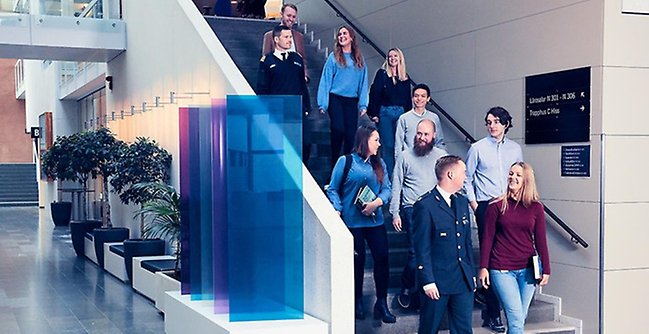
Education at the Swedish Defence University
Studies at Swedish Defence University - a both civil and military university - offers a completely different experience compared to most other universities.