
Marginal militaries: Navigating historical boundaries, differences and experiences at the military periphery
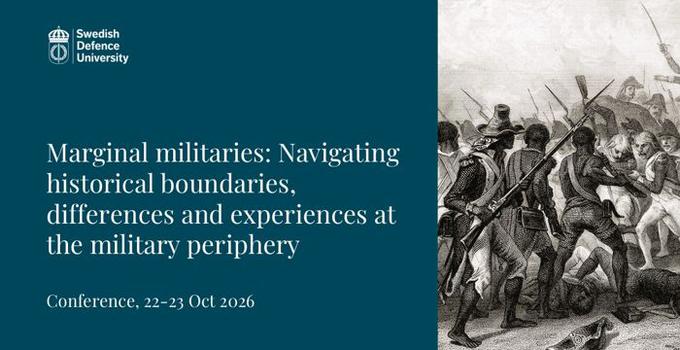
Illustration ot the 1802 Battle of Crête-à-Pierrot. Wikimedia commons
Military institutions have never been uniform or socially neutral. This conference explores how shifting boundaries of inclusion and exclusion have shaped service, belonging and hierarchy within armed forces across time and place.
From enslaved soldiers in republican-era Rome to foreign mercenaries in the Thirty-Years War and commonwealth soldiers in the World Wars, militaries have never been monolithic organisations. Rather, they have served as key sites in the formation of state power and different kinds of collective belongings. Yet the boundaries that determine who may serve, under what conditions and on whose behalf have never been fixed as these boundaries have shifted in response to changing configurations of citizenship, empire, class, gender, race/ethnicity, religion, physical capacities and national identity. Militaries have thus functioned both as mechanism for producing social hierarchies, and as arenas in which such hierarchies are negotiated, contested and reconfigured.
This conference will explore how lines of inclusion and exclusion have been drawn, negotiated and experienced within military organisations across diverse historical periods and geographical contexts. The aim is to foster a nuanced conversation that broadens our understanding of military institutions by focusing on the experiences and narratives of those often marginalised within them.
Call for papers
We welcome contributions which examine how distinctions such as the following have been historically constructed, negotiated and embodied/experienced within and/or in relation to military institutions, organisations and structures:
- Race, ethnicity and minority status: e.g. African American soldiers in the U.S. military; Indigenous service members in settler-colonial armies; colonial troops in imperial contexts;
- Gender, gender-identity/non-conformity and sexuality: e.g. Women in non-combat and combat roles; LGBTQ+ service members; gender-nonconforming individuals navigating gendered military norms;
- Nationality, migration and statelessness: e.g. foreign mercenaries; immigrant or stateless soldiers; conscripted colonial or occupied populations;
- Religion: e.g. religious discrimination or accommodation in military life;
- Disability status: e.g. Disabled veterans reintegrating into service; historical shifts in physical or mental fitness standards.
While the emphasis is on historical perspectives, proposals are also invited from scholars working in adjacent fields (e.g. sociology, political science, cultural studies).
Deadline for submission 28 Feb
Please submit a preliminary title of maximum 150 characters and an abstract of maximum 350 words to MarginalMilitaries@gmail.com by no later than 28 February 2025.