
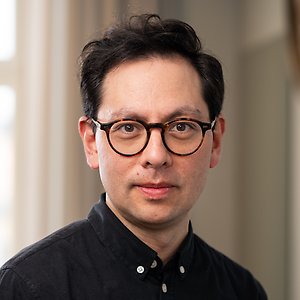
Claes Tängh Wrangel
Associate Senior Lecturer
- Claes.Wrangel@fhs.se
- +46706643816
- Department of War Studies
- Air Operations Division
- War Studies
About Claes
- Engelsk beskrivning om dig själv
-
Claes Tängh Wrangel's research interests concern the role and function of security policy in liberal societies in times of complexity and change, characterized by global terrorism, climate change and rapid technological development. His dissertation The Use of Hope: Biopolitics of Security During the Obama Presidency examined hope as a political concept and technology. Can hope, often seen as a strategy to deal with an unknown and uncertain future, change our need for security and control?
Projects:
The imaginative horizon of contemporary war: Neurobiology, AI and the US military (in collaboration with the University of Lapland, Finland). The project examines the US military's support of neurobiological research combined with AI technology to counter radicalization into violent extremism. Funded by the Swedish Research Council.
Cybersecurity and the Politics of Responsibility: Renegotiations of state-citizen relations in a digital democracy. The project examines how responsibility is articulated in Swedish cyber security policy from the national to the local level, with the aim of making visible the political and ideological meanings of responsibility that underpin the political endeavor to build and secure a future digital welfare state. Funded by the Swedish Research Council.
Selected publications
Latest publications
-
Racialised vocabularies of resilience — inequality, body and mind, refusalPart of Journal of Language and Politics
-
Racialising the resilient brain : The eugenic underpinnings of US military neurobiological discoursePart of Journal of Language and Politics
-
Dreaming of a Decolonial Language? The Limits of Posthuman Critique in the AnthropocenePart of Nordic Environmental Law Journal
-
Drömmen om ett dekolonialt språk? Kritiska teorier och AntropocenPart of Statsvetenskaplig Tidskrift
-
Securing the Hopeful Subject? The Militarisation of Complexity Science and the Limits of Decolonial CritiquePart of Hope in the Anthropocene: Agency, Governance and Negation