
Understanding politics through images and emotions
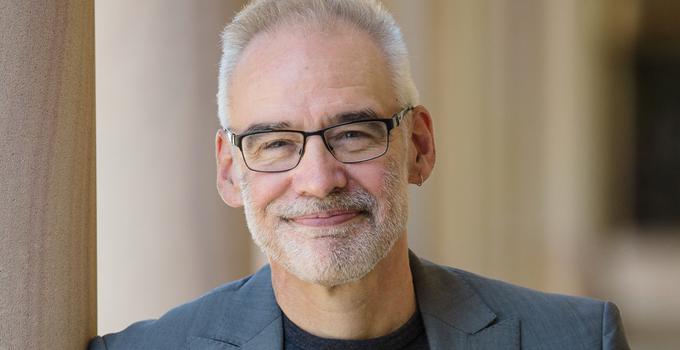
Roland Bleiker is Professor of International Relations at the University of Queensland and the 2026 holder of the Olof Palme Visiting Professorship at the Swedish Defence University. During his year in Sweden, he hopes to engage closely with students and colleagues through teaching, mentoring, guest lectures and workshops.
Roland Bleiker’s research focuses on the politics of visuality and emotions, examining how images shape political understanding and action across areas such as security, peacebuilding, humanitarianism, protest movements and the conflict on the Korean Peninsula.
“Images shape how we view, discuss and enact politics. They determine what and who is seen or not seen and how these visibilities and invisibilities influence both public perceptions and policy responses”, he says.
Bleiker emphasises that images and emotions are inseparable.
“There is no way of understanding political issues, including conflict, without understanding the emotions that drive them. Likewise, there is no way of finding solutions to conflict without addressing the deep-seated emotions that shape all parties as well as public perceptions and ostensibly rational policy approaches.”
Art and literature as ways to shed new understandings of political issues
His interest in this field is closely tied to a long-standing passion for ideas, writing, art and literature.
“I am an academic because I have a passion for ideas and for writing. This is how I hope to make a difference”, he says.
Over more than three decades, Bleiker has drawn on aesthetic sources to rethink central dilemmas in global politics.
“I have always believed that art and literature can open up different ways of understanding political issues. Aesthetics is not only about artistic expression, but about cultivating a more open-ended and creative sensibility toward the political.”
Rather than starting with a fixed methodology, Bleiker begins his research with a puzzle.
“I start with a question that matters, and then I use whatever approaches are best suited to explore it.”
This has led him to employ a wide range of methods, from discourse and content analysis to semiotics and autoethnography, as well as to lead interdisciplinary research teams combining qualitative and quantitative approaches. He is particularly interested in creative methods for studying images and emotions and looks forward to engaging with scholars at the Swedish Defence University who work in related areas.
Scholar by accident
Bleiker’s path into academia was neither linear nor planned. Raised in Zürich in a family that ran a small barber shop, he initially trained in law and worked in a notary office before completing his mandatory military service. A later decision to study international relations took him to Paris, Toronto, Vancouver and Canberra. In-between he spent two years as a Swiss Army Officer in the Korean Demilitarized Zone.
“In Korea, I worked closely with Swedish Officers as part of the Neutral National Supervisory Commission. My first academic position was then back in Korea, at Pusan National University. But I have now been at the University of Queensland for many years, with occasional short visiting stints elsewhere.”
Research projects and new collaborations
Looking ahead, Bleiker’s goal for the next few years is to complete several research projects developed with his wife and long-time research collaborator, Emma Hutchison, who passed away in late 2024.
“Over the past decade, many of these projects progressed more slowly than we had hoped. I am now focusing on completing these projects, including several essays on different topics, a book on emotions and a collaboration with over a dozen other colleagues on visualizing humanitarianism”, he says.
During his year at the Swedish Defence University, Bleiker hopes to engage closely with students and colleagues through teaching, mentoring, guest lectures and workshops.
“I look forward to interacting with, learning from and exploring collaborations with both students and academics at the Swedish Defense University. I also hope to visit universities in Lund, Gothenburg and Uppsala during my stay.”
He will also work on his principal current research project on how images shape responses to humanitarian crises. The project brings together two dozen researchers and photographers and involves several partner organisation, including The International Committee of the Red Cross and the World Press Photo Organisation.
“The current phase of the project involves editing a special issue journal on visualising humanitarianism beyond stereotypes that include collaborations between scholars and photographers.”
Furthermore, he plans to run several public events on visual politics during his stay in Sweden.
“I have done so for many years as part of the Visual Politics Research Program”, he says.
The Visual Politics Research Program is an informal network that brings together scholars who work on visuality from a range of different disciplines, including politics, communications, art history, geography, architecture and cultural studies.
“We usually run about a dozen public events each year, featuring new books or ongoing research on visual politics and I look forward to continuing this at the Swedish Defence University.”
In brief
Current: Professor of International Relations at the University of Queensland and the 2026 holder of the Olof Palme Visiting Professorship at the Swedish Defence University. Director of the Visual Politics Research Program and lead investigator of an interdisciplinary project that investigates how images shape responses to humanitarian crises.
Leisure activities: I love both digital and analogue photography.
Last book read: Arundhati Roy’s Mother Mary Comes To Me
Hidden talent: I stand on my head every morning.
I’m happy to discuss: What my colleagues at the Swedish Defence University are researching.
My driving force as a researcher: Passion and an attempt to be creative
Page information
- Published:
- 2026-04-10
- Last updated:
- 2026-09-04