
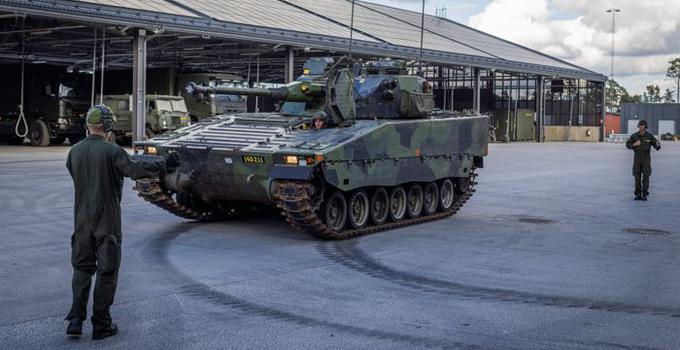
Photo: Daniel Klintholm/Försvarsmakten
Rapid growth meets old structures
The Swedish Armed Forces are in a situation where the demands for rapid growth are high. At the same time, traces of previous cutbacks remain. This affects how quickly and efficiently operations can be expanded.
A new study by Elin Doverborg, a former master’s student at the Swedish Defence University, highlights the growth of the Swedish Armed Forces through the development of the Gotland Regiment, P18. The regiment was disbanded in 2005 and re-established just over ten years later.
“The Armed Forces are expected to expand, but they are doing so with limited resources and after a long period of cutbacks. This creates tensions between political ambitions and practical reality”, she says.
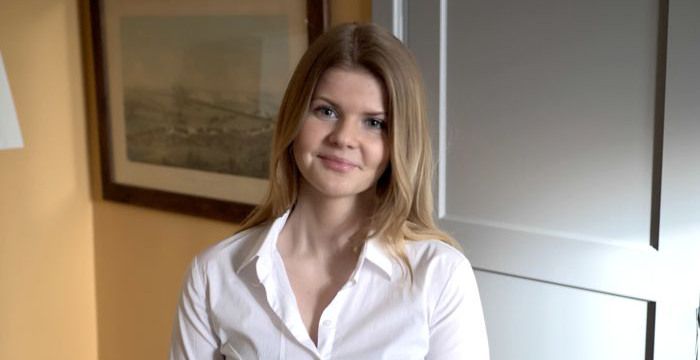
Elin Doverborg is a former Master’s student at the Swedish Defence University. Photo: Private
The study shows that the changes cannot be explained solely by the external environment. At least as important is how politics has framed the problems over time. In the early 2000s, the external environment was seen as stable, which made a regiment on Gotland less of a priority. When the security situation deteriorated, the problem was framed differently and re-establishment became an obvious measure.
Financial constraints shape the processes
At the same time, financial constraints have been a constant factor.
“Both the disbandment and the re-establishment were characterised by demands for efficiency and budget discipline", says Elin Doverborg.
This has contributed to the current situation. The Swedish Armed Forces are expected to grow rapidly, but have lost expertise, infrastructure and experience during previous cutbacks. This makes rebuilding more complex than it is often portrayed.
Local consequences for the population of Gotland
The study also points out that local consequences have received limited attention. The disbandment affected jobs and the population on Gotland, while the re-establishment has created new challenges, such as military investments clashing with local needs and problems relating to land, permits and staffing.
“The local effects have not been particularly visible in national politics, despite being significant”, says Elin Doverborg.
The study was based on an earlier research project on the growth of the Swedish Armed Forces and draws on an analysis of policy documents, municipal reports, audit reviews and media sources from 2004 to 2025. Its aim is to contribute knowledge about how rapid growth can be managed and how resources can be prioritised.
“The analysis of P18 shows that growth in the Swedish Armed Forces does not automatically solve old problems, but can also create new challenges both for the organisation and for society on Gotland", says Elin Doverborg.
Publication
Elin Doverborg (2026): What is the Problem Represented to Be? From Decommissioning to the Re-Establishment of the Gotland Regiment P18, Scandinavian Journal of Military Studies.
More about
Page information
- Published:
- 2026-04-10
- Last updated:
- 2026-04-15