
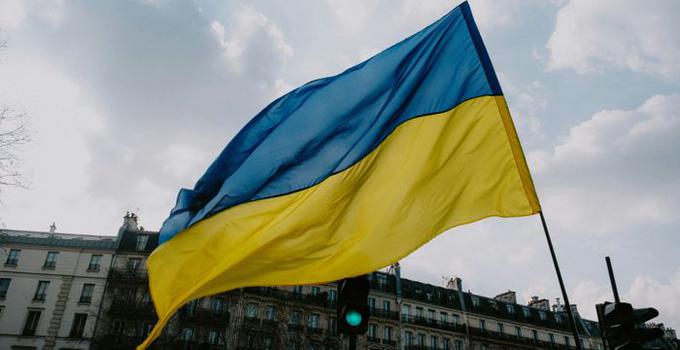
The war in Ukraine and the future of warfare
How is Russia's war in Ukraine changing our understanding of modern warfare? That is the central question explored in the new edited volume Russia's War in Ukraine and Modern Warfare: Strategy, Tactics, and Technology, published by Oxford University Press.
Russia's full-scale invasion of Ukraine has challenged established assumptions abouthow war is understood and fought. The conflict has become a prism through which the evolution of modern and future warfare can be understood - from the use of emerging technologies and uncrewed systems to command and control, logistics, and combat in urban environments.
A comprehensive perspective on the war
In the new edited volume Russia's War in Ukraine and Modern Warfare: Strategy, Tactics, and Technology, leading scholars and military practitioners provide a comprehensive analysis of the war and its implications for contemporary and future warfare. Published by Oxford University Press, the book is available open-access.
"We wanted to bring together leading scholars and practitioners to analyse the war as a whole, rather than focusing solely on individual battles or technological innovations. Only by examining strategy, tactics, and technology in relation to one another can we fully understand the lessons this war offers for the future of defence", says Mikael Weissmann, Senior Lecturer at the Department of Systems Science for Defence and Security and Deputy Director of the Swedish Defence University Centre for Land Warfare. Together with Niklas Nilsson, Associate Professor in War Studies, Land Operations Division and Centre for Societal Security (CTSS), Swedish Defence University, he serves as editor of the volume.

The book is a follow-up to Advanced Land Warfare: Tactics and Operations (2023).
“The new volume broadens the perspective from land warfare to modern warfare and analyses how experiences from the war in Ukraine are changing established theories of how wars are fought and directed, and how they evolve”, says Mikael Weissmann.
The book is available open access, and the print edition will be published on 20 August 2026.
From drones to logistics and command
One of the book's key conclusions is that the war cannot be understood through any single technology or weapon system.
"Many people associate the war with drones and new technologies. However, the conflict demonstrates that modern warfare is always decided by the interaction between strategy, tactics, and technology. Command and control, logistics, training, and organisation are at least as important as technological developments", says Niklas Nilsson.
The volume analyses topics including manoeuvre warfare, command and control, urban warfare, logistics, military health services, intelligence, force generation, and the development of uncrewed systems. It concludes with five chronological case studies tracing the evolution of the war from 2014 to 2025, illustrating how different phases of the conflict have reshaped our understanding of modern warfare.
Contributions from the Swedish Defence University
Researchers from the Swedish Defence University authored seven of the book's nineteen chapters. Their contributions cover subjects including urban warfare, the air war over Ukraine, intelligence, and the development of the conflict during 2023 and 2024.
Publication:
Mikael Weissmann and Niklas Nilsson (eds): Russia's War in Ukraine and Modern Warfare, Oxford University Press (open access). The print edition will be published on 20 August 2026.
Contributors from the Swedish Defence University
- Introduction: Russia's War in Ukraine and the Evolution of Modern Warfare, Mikael Weissmann and Niklas Nilsson.
- The City as a Battlefield: (Re)Thinking Urban Warfare in the Wake of Ukraine, Mikael Weissmann and Douglas W. Winton.
- Air War over Ukraine, Viktoriya Fedorchak.
- Intelligence and Russia's War in Ukraine, Niklas Nilsson.
- The 'Spring Offensive' 2023, Viktoriya Fedorchak.
- The Ukraine War in 2024: The Kursk Incursion and Beyond, Markus Balázs Göransson.
- Conclusion: Russia's War in Ukraine: Taking Stock, Niklas Nilsson and Mikael Weissmann.
Work on the volume was supported by development funding from the Joint Advanced Command and Staff Programme at the Swedish Defence University and by the Swedish Armed Forces' Research and Technology Development Programme (Land Systems).
Page information
- Published:
- 2026-07-30
- Last updated:
- 2026-07-31